The Biopsychosocial Model and the "One Next Question"
May 12, 2026·By John Lowson
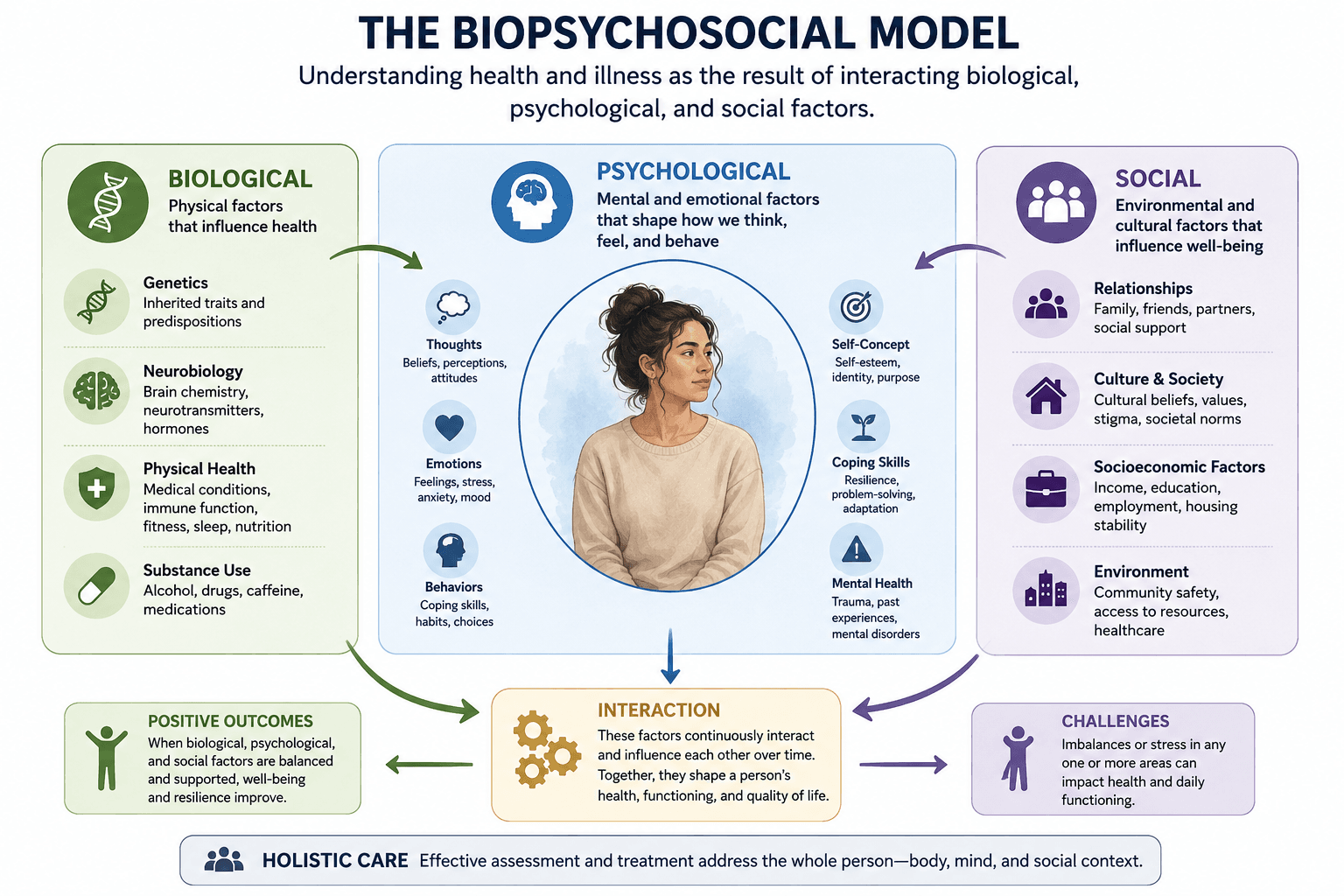
While modern medicine often segments the human experience into specialised slots, the biopsychosocial model offers a more integrated perspective. It posits that health and illness are not merely products of biological pathology, but are shaped by the dynamic interplay between biology, psychology, and social context.
Although the framework was formally codified by Dr George Engel and Dr John Romano in the 1970s, its roots trace back centuries, echoing a long-standing medical intuition that a patient is more than the sum of their symptoms.
The Power of Systems Thinking A biopsychosocial approach recognises that these three domains overlap and influence one another. By understanding these intersections, practitioners can develop more nuanced, effective treatment plans. This model prioritises:
Patient Agency: Valuing the individual’s self-awareness and expertise.
The Therapeutic Alliance: Recognising the impact of the provider-patient relationship.
Life Context: Accounting for the unique circumstances in which a person lives. Clinically, this is often expressed through yet another set of "Four Ps", this time the Four Ps of case formulation: Predisposing factors (genetics), Precipitating factors (triggers), Perpetuating factors (what keeps the problem going), and Protective factors (strengths).
The Three Pillars of Holistic Health Understanding an individual requires looking through three distinct yet blurred lenses:
Biological: This covers the "hardware" the genetics, physical health, and organ function. Our brain is an organ, and physical ailments often have psychological consequences; for example, chronic pain is a frequent driver of clinical depression.
Psychological: Mental health is health. Maladaptive thought patterns and behavioural cycles can exacerbate physical conditions. Conversely, lifestyle habits, like routine physical activity serve as powerful tools for maintaining systemic equilibrium.
Social: No person exists in a vacuum. Our environment can either buffer us against stress or act as a primary stressor. Addressing an environmental stressor, such as social isolation, can be just as therapeutic as medication.
The Biopsychosocial ModelWhy Clients Rarely Present with "Just One Problem" In the context of Solution Focused Hypnotherapy (SFH), we rarely see a client who is struggling with a single, isolated issue. Why? Because the biological, psychological, and social systems are so deeply entwined, a simple "glitch" in one area almost inevitably ripples into the others.
For example; A client may come in for "insomnia," but through a biopsychosocial lens, we often find that. Their sleep deprivation has led to increased cortisol and physical exhaustion.(Biological). This exhaustion reduces their emotional regulation, leading to anxiety about their performance at work.(Psychological) and that anxiety causes them to withdraw from friends, removing the very social support that could buffer their stress. (Social).
This "systemic stack" is why our clients problems feel so heavy and complex. When a client says they have "multiple problems," they are accurately describing the interconnected nature of their BPS systems.
The "One Next Question": Integrating Solution Focused Questioning
While the BPS model provides the map of these complexities, Solution Focused Questioning provides the engine for change. Rather than getting lost in the "why" of every interconnected problem, questioning in a solution focused context directs the brain's focus toward the desired future.
1. The Miracle Question Instead of trying to untangle every social and biological knot, we ask: "If a miracle happened tonight and the problem was solved, what is the first small thing you would notice tomorrow that would tell you life is different?" This helps the client define a version of themselves where all systems are functioning optimally.
2. Scaling and Exception-Seeking If a client is overwhelmed by multiple issues, scaling helps them find a foothold. We might ask, "On a scale of 0 to 10, how much in control do you feel today?" Even a "2" is an opportunity to ask, "How are you managing to keep it at a 2 and not a 0?" This identifies the protective factors, the biological resilience or social supports that are already working.
3. Small Steps, Systemic Shifts In SFH, we focus on a clients desired outcomes, that "one next step." Because these systems are interconnected, a small psychological win (like an upbeat positive solution focused hypnotherapy session) can lower cortisol (biological) and give the client the confidence to reach out to a friend (social).
So for Healthcare Professionals: Utilising this integrated approach means acknowledging the complexity of the "stack" without being overwhelmed by it. It prevents "misdiagnoses" while simultaneously using Solution Focused Questions to empower the patient to find the easiest point of entry for change.
For Patients and Clients: The BPS model, paired with solution focused thinking, is a tool for self empowerment. It moves the conversation away from "What is wrong with me?" toward "What is happening across my life systems, and what is the one next step I can take to move forward?"
When we adopt this model, we certainly stop seeing a cluster of symptoms and start seeing the whole person. A complex human being with the innate capacity to co-construct their own path to wellness.